
Материалы, используемые в интерьере зданий начальных школ: функциональные, эстетические и психологические аспекты
Материалы, используемые в интерьере зданий начальных школ: функциональные, эстетические и психологические аспекты

Аннотация
В статье рассматривается важность материалов, используемых в интерьере зданий начальных школ, с акцентом на их функциональные, эстетические и психологические аспекты. Внутренняя среда данных учебных заведений играет ключевую роль в формировании у детей начальных привычек обучения, социальных навыков и моделей эмоционального поведения. Материалы, применяемые для отделки полов, стен и потолков, изготовления мебели и декоративных элементов, не только выполняют технические функции, но и активно формируют функциональное, эстетически целостное и психологически благоприятное пространство.
Здания начальных школ подвергаются интенсивной эксплуатации, что требует использования прочных, простых в обслуживании и безопасных материалов. В то же время они должны создавать ощущение безопасности, комфорта и принадлежности к школьному сообществу. Особое значение имеет психологическое воздействие материалов — они должны способствовать концентрации внимания, снижать уровень тревожности и стимулировать участие в учебном процессе. Гибкие учебные пространства в начальных школах демонстрируют заметное улучшение качества микроклимата в помещениях и повышение вовлеченности учащихся
.Обсуждаются различные виды материалов и их роль в создании благоприятной учебной среды. Например, дерево, текстиль и резиновые напольные покрытия выбираются за их теплоту и уют, тогда как более холодные и твёрдые материалы, такие как камень и бетон, применяются в основном в зонах общего пользования и санитарных помещениях. В заключение в статье отмечается, что правильный выбор и сочетание материалов имеют решающее значение для создания эстетически привлекательной и функциональной учебной среды, способствующей эмоциональному и социальному развитию детей.
1. Introduction
The interior environment in the primary school represents a specific type of educational environment in which children’s first purposeful learning habits, social skills and emotional behaviour patterns are formed. The materials used to shape this environment — floor finishes, wall and ceiling claddings, furniture and additional elements — are not merely technical solutions, but key instruments for creating a functional, aesthetically consistent and psychologically favourable space.
Primary school buildings are characterised by a high intensity of use — a large number of children, frequent class changes and intensive daily occupancy. This requires materials to be durable, wear-resistant, easy to maintain and safe. In addition, they must support pupils’ emotional comfort, create a sense of security, warmth and belonging to the school community .
The emotional image of the interior is formed by the structure, colour and texture of the materials that cover the enclosing elements — floor, walls and ceiling — as well as by the type of furniture and additional decorative elements. At primary school age, the visual legibility of the space, the clear organisation of zones, and the presence of “warm” materials and soft surfaces support concentration, reduce anxiety and stimulate participation in the learning process.
Contemporary practice shows that limiting the number of materials used in the interior leads to a clearer, calmer and more orderly visual image. An excessively rich palette of different materials, textures and colours often creates a sense of chaos and overload, which is unfavourable for younger children. Conversely, extreme monotony or rigidity — for example, the dominance of a single material in floors, walls, ceilings and furniture — may lead to apathy, lack of stimuli and reduced motivation for activity.
In this context, the interior environment in the primary school is shaped through collaboration between architects, interior designers, educators and child psychologists. On the basis of analyses, accumulated practice and contemporary research, principles are developed for the selection and combination of materials that ensure an attractive, safe and psychologically supportive learning environment.
2. Specifics of the interior environment in the primary school
The interior of the primary school has several clearly expressed characteristics that distinguish it from kindergartens and schools for higher stages of education.
2.1. Age-related sensitivity
Pupils in the primary stage are in a period of intensive psychophysical development. They are more emotional, more active and more vulnerable to external stimuli. Therefore, materials should:
– create a sense of security and comfort — this is related to the early age of the children, the fact that they enter school after kindergarten, are still not very independent and their bond with the family remains very strong;
– reduce the risk of injuries (soft floor coverings, rounded edges, non-sharp surfaces) — insufficiently developed fine motor skills, clumsiness and awkwardness at this age often lead to injuries as a result of falls and impacts against furniture and objects;
– maintain visual and acoustic comfort, without strong glare and excessive noise.
2.2. Functional flexibility of the spaces
Due to the difficulty of maintaining concentration and the frequent loss of interest in the learning process, constant changes in teaching techniques are necessary. Different lessons often need to be conducted in different zones of the same room. Very often, short games are required between lessons for relaxation and unwinding.
Therefore, the primary classroom often combines:
– a zone for frontal teaching in front of the board;
– a zone for group work;
– a zone for play, reading or relaxation .
This necessitates the use of materials that allow easy reorganisation of the space and clear visual separation of the different functions.
2.3. Increased requirements for safety and health
This applies fully to all educational buildings, rooms and spaces. All materials used must:
– be harmless, without releasing toxic substances;
– not cause allergies;
– be fire-safe and comply with regulatory requirements for public-service buildings.
2.4. Psychological effect of the materials
3. Types of interior materials and their role in the primary school
3.1. Structural elements and technical infrastructure as part of the interior image
In contemporary school design, parts of the structural system and technical infrastructure are often left visible — reinforced concrete beams, walls and columns, air ducts, ventilation, heating and air-conditioning installations. This is not a problem when it concerns older pupils, but it is not always a good solution for children in the primary stage.
In the primary school, this approach must be very carefully balanced:
1. Exposing the structure can:
– create a feeling of clarity and legibility of the space;
– provide educational potential – children see “how the building is made”.
2. At the same time, large massive concrete or metal surfaces:
– may appear imposing and “cold”;
– require softening through combinations with wood, coloured textiles or decorative panels, so as not to create an oppressive atmosphere.
Therefore, in primary schools it is advisable that structural elements be used sparingly and in combination with warmer materials. Very often they are painted in brighter colours. Interesting combinations of pure tones are sought, which are perceived best by this age group.
3.2. Decorative materials and elements
Facing decorative materials — wall claddings, floor finishes, suspended ceilings, plasters, textile and plastic panels — are a basic tool for the visual and emotional regulation of the environment. In the primary school, they serve to:
– visually structure the space — separation of zones for play, learning and movement;
– support orientation — coloured bands, different textures and materials in different functional areas;
– create the identity of the class or school — through art panels, wall graphics, integrated symbols and emblems.
3.3. Acoustics and noise. Acoustic solutions
Acoustic comfort is extremely important in the primary school. Very often, we as designers tend to underestimate acoustics and noise as factors in forming a good learning environment. “Naturalness of classroom window and interior views was positively associated with well-being and attention performance among primary school children” . However, to a large extent, problems in the learning process are directly related to inadequate acoustic solutions:
– noise easily leads to distraction;
– the attention of young pupils is difficult to sustain;
– the teacher must be clearly heard from all positions in the classroom. To avoid problems related mainly to acoustics, it is necessary to carry out measurements in the rooms and to take measures associated with the use of sound-absorbing and sound-reflecting materials. The use of such materials in floor finishes, wall claddings and ceilings leads to good solutions:
– reduces reverberation and echo;
– improves speech intelligibility;
– creates a calmer and more focused learning atmosphere.
4. Analysis by main groups of materials in the primary school interior
4.1. Wood — warmth, comfort and connection with nature
Wood is one of the most suitable materials for primary school interiors. It creates a sense of warmth, human scale and closeness to nature. In addition to its emotional effect, wood has a number of functional advantages — good thermal properties, a pleasant-to-touch surface and the possibility for diverse forms. Wooden classroom interiors significantly improved students’ mood states compared to standard classrooms
. Wooden classroom furniture increased students’ perceived comfort, emotional positivity and attachment to the learning environment. Natural materials were consistently associated with higher ratings of well-being among both pupils and teachers” .The basics of the application in the initial course:
1. Floor finishes: parquet, multilayer parquet, laminate, solid wood flooring — particularly suitable for classrooms and play areas. They are perceived as a “warm” flooring, less slippery and softer in case of falls compared to stone or ceramics.
2. Wall claddings and panelling: used in corridors, classrooms and common areas to reduce the sense of coldness and to protect walls from mechanical damage at the height of children’s movements.
3. Ceilings: wooden ceiling panels or slats can improve acoustics and create a homely, cosy character in the classroom.
4. Furniture and facilities: desks, chairs, cupboards, shelves, play and activity tables, book and material shelving — most often in wood or a wood–metal combination. Wooden surfaces soften the industrial appearance of metal elements. Wood in the interior also has psychological advantages:
– reduces perceived stress;
– supports attachment to the space;
– facilitates the transition between the home and school environments.
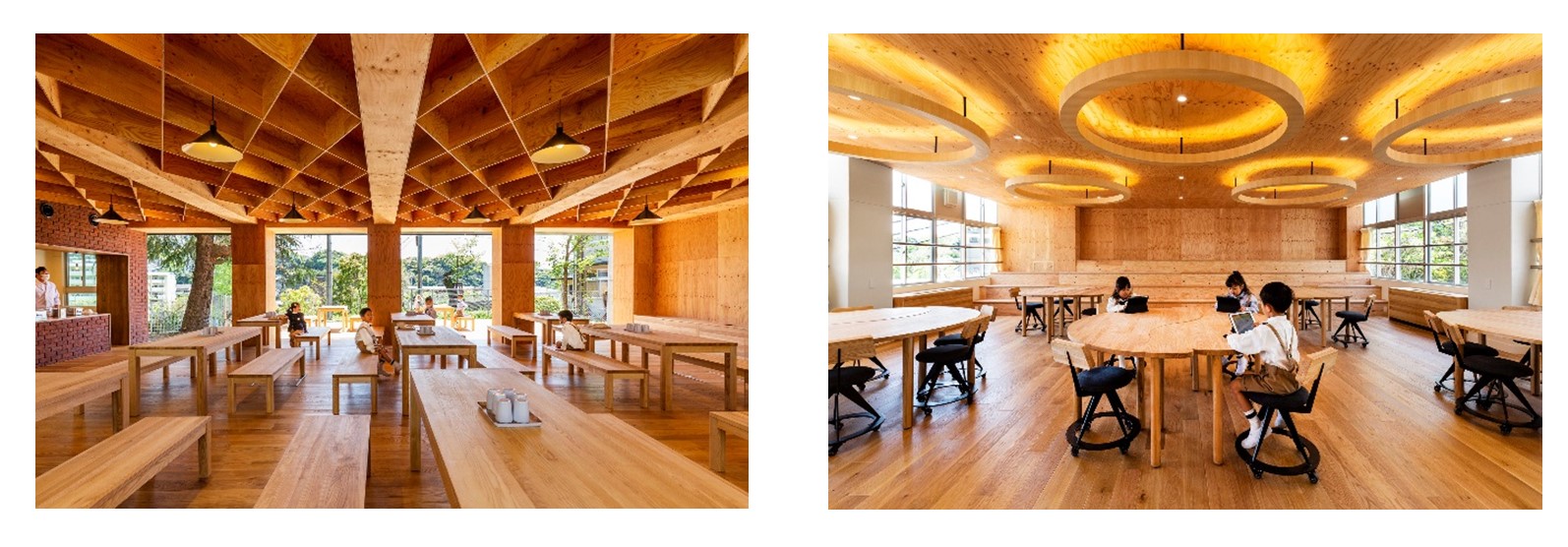
Figure 1 - Example of the use of wood in the interior – floor finishes, wall claddings, suspended ceilings and furniture
Note: KB Primary and Secondary School by HIBINOSEKKEI + Youji no Shiro, Sasebo, Japan, Popular Choice Winner, 8th Annual A+Awards, Primary & High Schools (Architizer, 2020)
Textiles — in the form of curtains, draperies, upholstery, carpet tiles, rugs and textile panels — play a key role in creating a cosy, muted and protective atmosphere in the primary school.
Main directions of application that lead to good results and improve the learning environment:
1. Curtains and draperies:
– used as an alternative to blinds;
– regulate daylight and prevent glare;
– add softness and colour, soften the contrast between windows and walls.
2. Floor finishes — carpet tiles and rugs:
– typically used in play zones and in front of the board, where children sit on the floor, read, listen or work in groups;
– reduce noise from footsteps and movement, enhancing acoustic comfort;
– provide greater safety in case of falls and physical contact;
– often used for zoning through colour and shape — for example, a distinct “round zone” for joint activities.
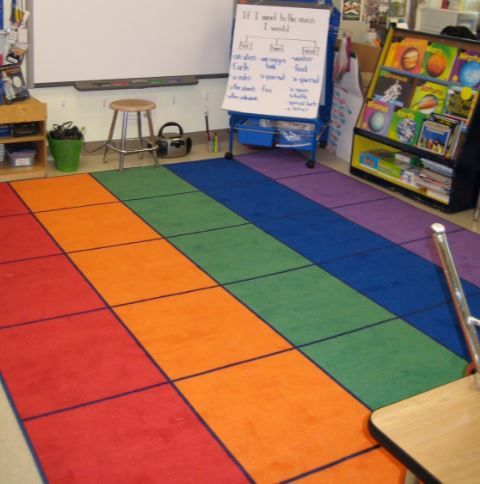
Figure 2 - Examples of textile use in a primary school interior
Note: source [8]
– textile panelling and acoustic panels are used in corridors, multipurpose halls, music rooms and rooms for extracurricular activities;
– they provide excellent sound insulation and sound absorption;
– they create a softer and more pleasant visual environment compared to that achieved only with plaster or ceramics.
Disadvantages and requirements. Like any other material, textiles in the interior have certain disadvantages:
– textile coverings require more frequent maintenance and cleaning;
– it is necessary to use materials that are stain-resistant, highly wear-resistant and antibacterial or easy to disinfect.
Despite these limitations, textiles remain indispensable for forming the “soft core” of the primary school interior.
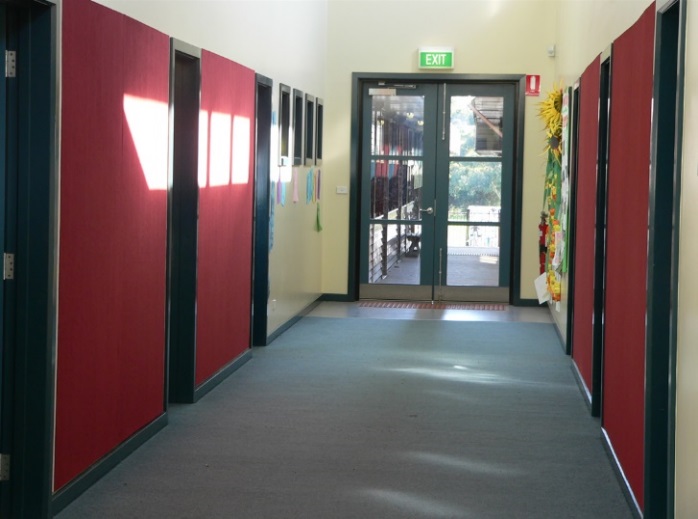
Figure 3 - Example of textile wall cladding in school corridors
Stone and its varieties (marble, granite, terrazzo, gneiss, limestone, etc.) possess a high degree of durability and a monumental expression, but in primary schools they must be used with particular caution.
Applications in primary school buildings:
1. Corridors and staircases — these are the areas where stone finds its widest application. It is preferred because of:
– exceptional wear resistance;
– easy maintenance and cleaning;
– resistance under intensive traffic.
2. Entrance foyers and common areas — stone floor finishes convey stability and seriousness of the institution. In these parts, similar to corridors and stairwells, materials with high wear resistance, easy cleaning and maintenance, durability and strength are preferred.
In classrooms, stone is not recommended as a primary floor finish due to:
– the coldness of the surface;
– its hardness and the risk of injuries in case of falls;
– a weaker sense of comfort.
When stone is used in the primary school interior, it is important to:
– compensate it with “warm” materials — wood, textiles, coloured decorative elements;
– provide additional floor coverings — rugs, carpets or rubber flooring — in zones where children play or sit on the floor.
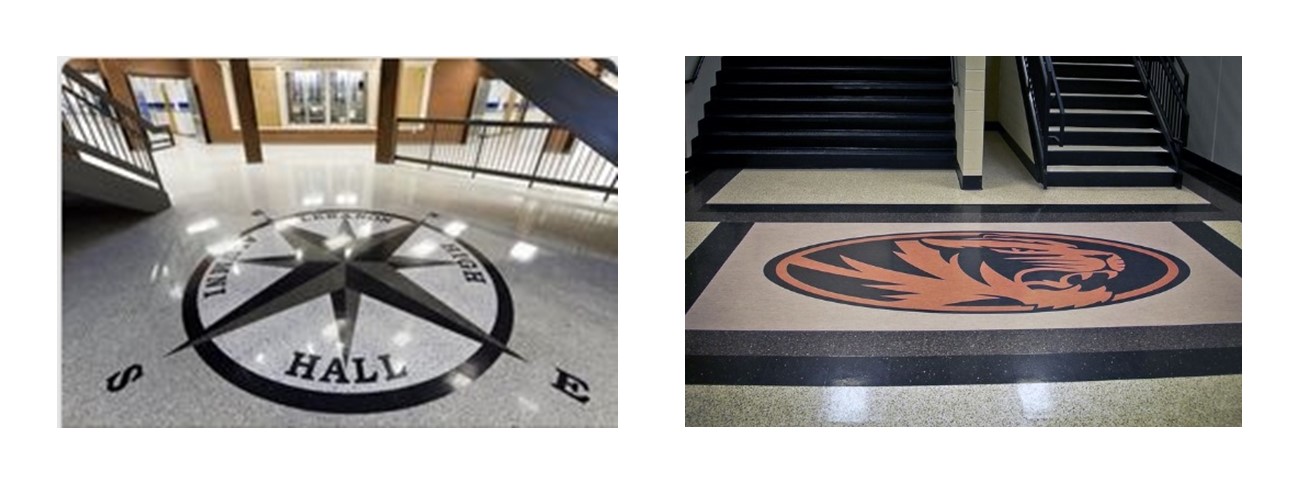
Figure 4 - Examples of granite floor finishes in common areas – stairs and corridors
1. Plaster is the basic material for finishing walls and ceilings. It has a neutral character and is suitable for almost all areas in primary school buildings . It is preferred because of:
– a rich variety of textures — smooth, textured, sprayed, dragged, etc.;
– flexibility in the choice of colours and decorative techniques.
In the primary school, plaster:
– serves as a “background” on which educational and decorative elements — panels, notice boards, children’s drawings — are added;
– contributes to visual cleanliness and clarity, if soft, unobtrusive colours are selected;
– allows zoning through colour — different colour schemes in different parts of the classroom or corridor.
Ceramics — tiles and porcelain stoneware — plays a particularly important role in zones where water is used or a high level of hygiene is required:
– sanitary facilities — ceramics are the standard solution for floors and walls;
– kitchens, dining and food preparation areas — easy to clean, resistant to moisture and soiling;
– areas for art and craft education — floor finishes and partial wall claddings that withstand contamination with paints, adhesives, etc.;
– common spaces such as foyers, corridors and stairwells;
– service rooms.
In classrooms, ceramics may be used in a limited way – for example, in parts of the space where there are washbasins or specific activities — but for the main area, warmer floor finishes (wood, rubber, cork) are recommended.
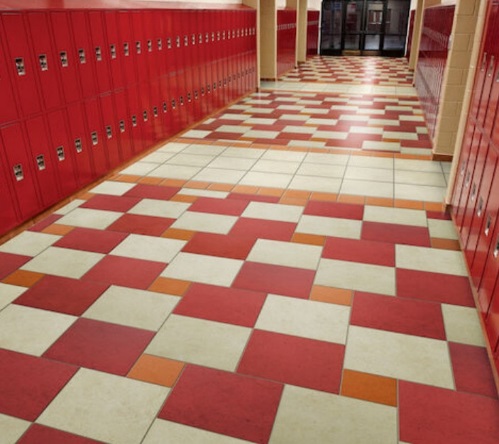
Figure 5 - Example of ceramic flooring in a primary school
Note: source [7]
Glass is an inevitable material in the school environment — primarily in windows and glazed doors. Nevertheless, it must be used in a very balanced manner in interior spaces . Modern substitute materials are often employed. In the primary school, the main requirements for glass are:
Maximum safety — the use of:
– tempered glass;
– laminated glass (multi-layered safety glass);
– alternative transparent materials — plexiglass, polycarbonate.
Light control — glazed surfaces must ensure:
– sufficient daylight;
– absence of glare on work surfaces and the board.
In the primary school interior, extensive use of glass for partition walls, railings or low-height glazing is not recommended, as young children are more prone to running, collisions and accidental impacts. If glass is used, it must:
– be adequately protected;
– be combined with visible frames and coloured markers for better visual recognition.
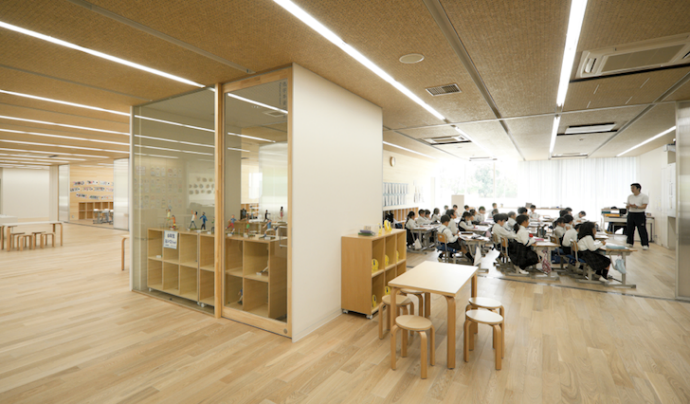
Figure 6 - Example of glass partitions
Note: Teikyo University Elementary School [2]
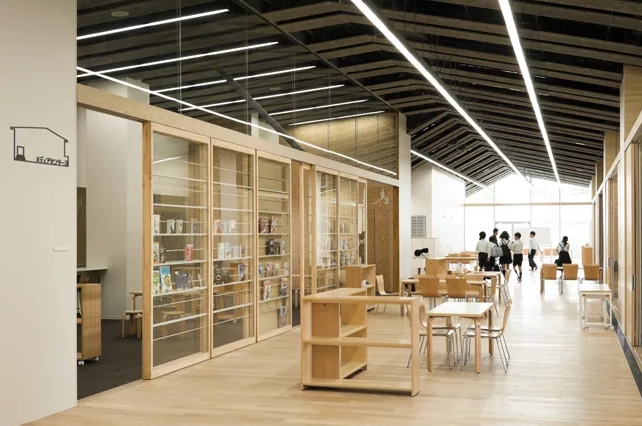
Figure 7 - Example of glass partitions
Note: Teikyo University Elementary School [2]
Due to their favourable properties, metals are an integral part of everyday life and are present in every interior. Metals — aluminium, steel and, more rarely, bronze — are used in primary school interiors mainly as:
– structural elements of furniture — metal frames of desks, chairs and tables;
– hardware and accessories — handles, hinges, skirting, railings;
– components of lighting fixtures and interior joinery.
The advantages of metals include:
– high strength and durability;
– visual lightness with slender profiles;
– the possibility of combining with wood and plastics.
In the primary stage, metal rarely appears as a dominant visual material; it is more appropriate for it to act as a “skeleton”, complemented by warmer and more pleasant-to-touch surfaces — wooden tops, plastic seats, textile elements. Metal surfaces should not be excessively cold to the touch and sharp edges should be avoided.
4.7. Plastics and rubber floorings — flexibility, safety and colour
Plastics are among the most widely used materials in the interiors of primary school buildings. Their advantages are related to the properties they possess:
– flexibility in shaping;
– a rich range of colours and textures;
– easy maintenance and cleaning.
Main applications:
1. Rubber and other plastic floor finishes
In recent years, these have increasingly been used as floorings not only in common areas, but also in classrooms. Their advantages include:
– ensuring safety in case of falls;
– enabling a variety of colour solutions. They can incorporate coloured zones, graphic signs, letters and numbers with an educational function;
– good sound-absorbing properties and a significant reduction of noise levels.
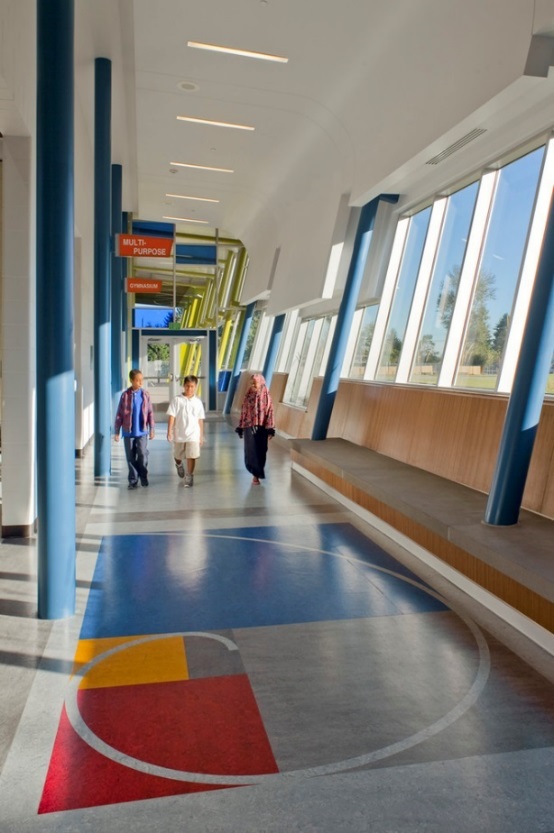
Figure 8 - Use of rubber flooring in a primary school corridor
Note: source [1]
Due to their favourable properties, these are often used as wall claddings both in common spaces and in classrooms and subject rooms. They are most frequently applied as panelling that replaces traditional wood panelling. They are also widely used in sanitary rooms instead of faience tiles. Their advantages are:
– impact resistance;
– easy cleaning;
– allowing a wide range of colours and graphic solutions appropriate for primary age.
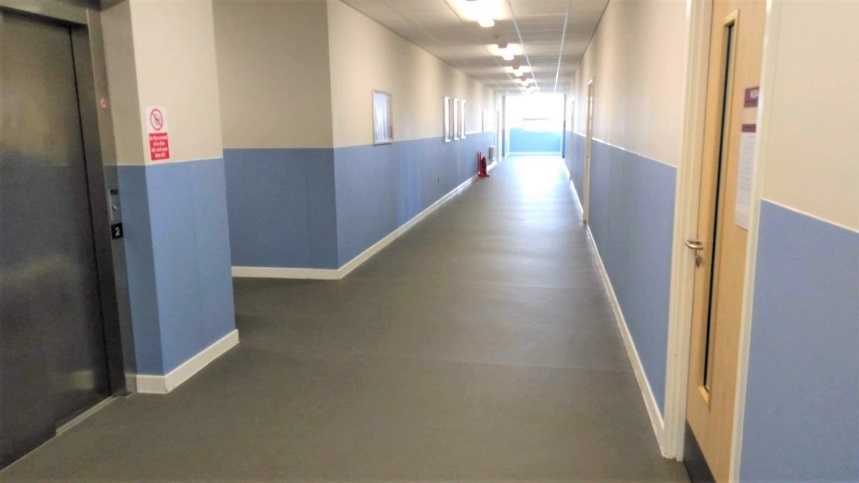
Figure 9 - Example of PVC panels used as wall cladding in a primary school
– lightweight plastic panels are used to divide spaces without reducing flexibility of use;
– they can be combined with textiles or graphics.
4. Transparent plastics — plexiglass, polycarbonate
These are used as a safer substitute for glass in partitions, display cases and protective coverings for children’s work and exhibits.
An important clarification: when using plastics, it is essential to select certified materials, free from harmful emissions, with an appropriate fire resistance class and compliant with children’s health standards.
4.8. Exposed and polished concrete — a limited role in the primary school
Exposed concrete is popular in contemporary interior design, but in primary schools it should rarely be used as a principal interior material because it:
– can create a sense of coldness, distance and industrial harshness;
– in large quantities has an unfavourable effect on the psychological comfort of young children.
Polished concrete as a floor finish in corridors can be a functional solution due to:
– exceptional wear resistance;
– easy maintenance;
– the possibility of integrating coloured inlays or stamped patterns.
Nevertheless, in classrooms it is advisable that concrete be used only to a limited extent and in combination with:
– wood;
– textile and plastic floorings;
– light, warm colours that soften its industrial character.
5. Principles and rules for selecting and combining materials in the primary school
There are no strictly fixed rules prescribing a specific material for each interior element. However, practice has established several basic principles that are particularly important for the primary age group:
1. Aesthetic compatibility and visual legibility
Materials should be combined so as to:
– achieve harmony between colours, textures and structures;
– ensure that the boundaries between different materials are logical and support children’s orientation;
– avoid excessive colourfulness and overload, especially in learning spaces.
2. Tectonic clarity and sense of stability
Enclosing surfaces and main elements must convey:
– load-bearing capacity and safety;
– clear differentiation between “load-bearing” and “light” elements.
When lightness and transparency are sought, they must be ensured safely — through textiles, panels and lightweight partitions, rather than through risky glazing at heights accessible to children.
3. Strength, safety and hygiene
Interior materials in the primary school must:
– withstand intensive use, impacts and scratches;
– not break into sharp fragments;
– be easy to maintain and suitable for regular disinfection;
– be harmless to health, with minimal emissions of harmful substances.
4. Combining “warm” and “cold” materials
To achieve a balanced and pleasant environment, it is recommended that:
– hard and cold materials (stone, ceramics, concrete, metal) be used mainly in common areas and combined with wood, textiles, plastics and other materials with a softer character;
– in classrooms, libraries and play zones, dominant materials should be wood, textiles and rubber floorings, which ensure comfort and “softness”.
5. Functional logic and long-term sustainability
The selection of materials must always be coordinated with the specific function of the rooms:
– classroom — comfort, acoustics, visual clarity, potential for creative decoration;
– corridors and staircases — strength and safety in movement;
– sanitary facilities and kitchen areas — hygiene and easy cleaning.
– sanitary facilities and kitchen areas — hygiene and easy cleaning.
Well-coordinated materials, light and spatial proportions can transform even relatively simple combinations into a high-quality interior environment.
6. Conclusion
Based on the reviewed materials and their applications in primary school buildings, several key conclusions can be drawn:
1. There is no universal recipe for the “right” material, but every decision must result from professional judgement and consideration of the age-specific characteristics of primary school pupils.
2. The youngest pupils have a particular need for “warmth” and comfort; therefore, it is recommended that primary school interiors be dominated by:
– natural materials such as wood and cork;
– textiles — curtains, rugs, textile panels;
– colorful, but not aggressive, plastic and rubber floorings.
3. Hard, “cold” materials (stone, concrete, large areas of ceramics and metal) have their place mainly in common areas and sanitary zones, and even there only when combined with softer and more pleasant materials, so as not to create a sterile or alienating atmosphere.
4. The safety and healthfulness of the materials used are an absolute priority — from the choice of glass and plastics, through the treatment of wood, to the type of floor finishes and wall coverings. Materials must not emit harmful substances, increase the risk of injuries or hinder evacuation.
5. In all cases, the general rule applies that interior materials and elements — both in the interior and exterior — should be as safe as possible, not harm the health of children and teaching staff, and support the processes of learning, play and socialisation.
Thus, the interior environment of the primary school becomes not only a “background” but an active participant in the educational process — through the materials that shape the space, it cultivates a sense of aesthetics, order, safety and respect for the environment in which the child grows and develops.